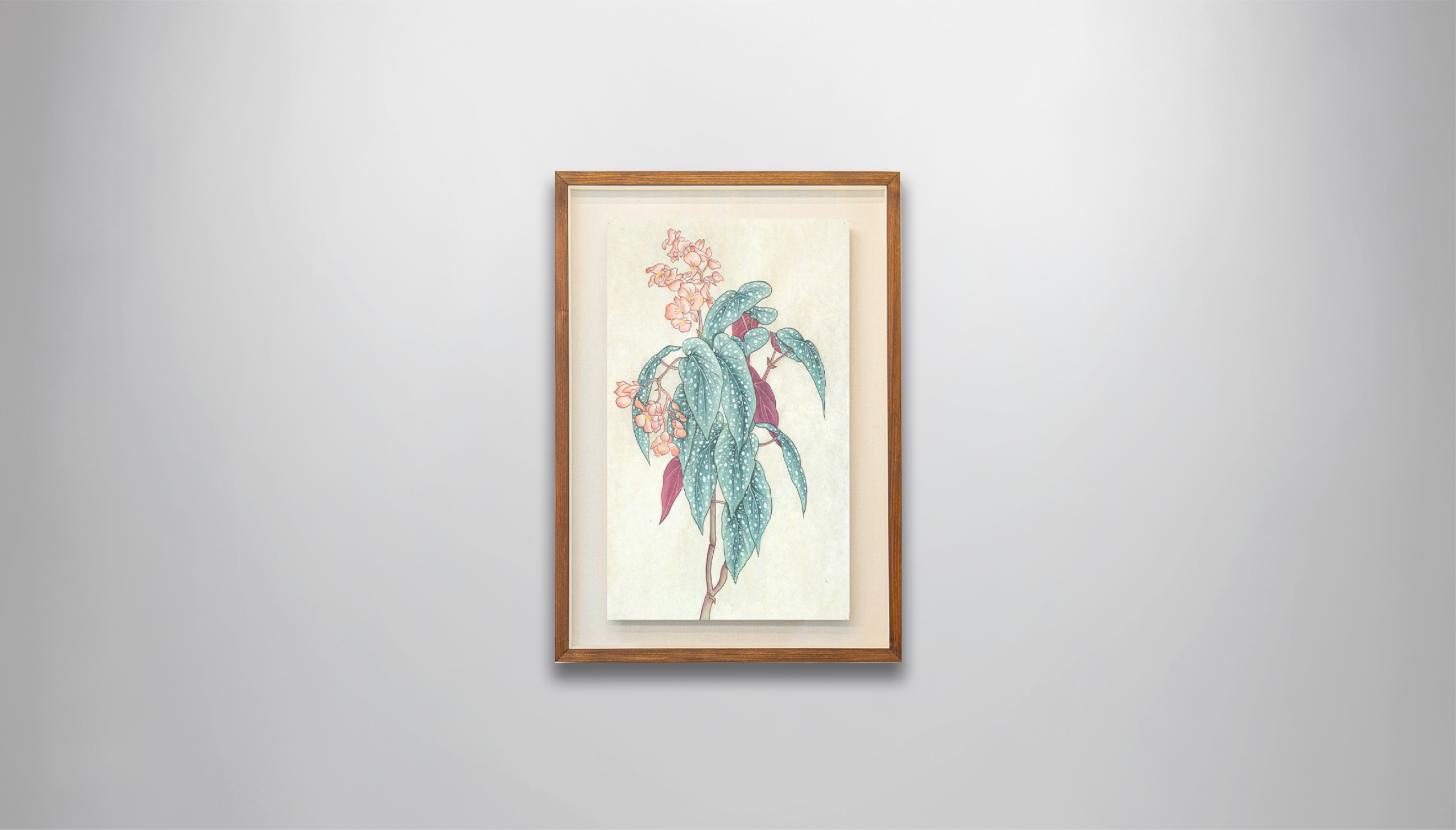
BEGONIA
Begonia
베고니아
Artwork dimensions exclude the frame. Items are shipped with the frame included.
Please note that dimensions may vary slightly due to the framing process.
Please allow approximately 2 to 3 weeks for delivery. Each piece is carefully packaged to ensure it arrives in perfect condition.
Begonia — Korean Heritage Painting
A talisman for red-blooming luck — raising the yang energy of any space it enters. The warmest of classical Korean painting's good-fortune talismans.
Begonia is, at first glance, exactly what it looks like: a begonia in full bloom. Rich red petals crowd every branch, wide glossy leaves fill every gap, and the whole thing pulses with a kind of abundance that seems barely contained by the frame. Overflowing. Alive. And yet in the hands of a Korean court painter, a begonia was never just a flower. Tucked inside every petal, every leaf, every stroke of the brush was something more — a wish for a better life, a quiet prayer for fortune, a hope held out toward luck. That is how minhwa paints a flower.
In East Asian culture, the begonia has carried a long and serious reputation as a bringer of luck and good fortune. Its classical name in Chinese characters — 秋海棠, "autumn sea blossom" — evokes abundance and a life of generous overflow. The deep red of the flower is, across Eastern tradition, the color of luck, joy, and protection against negative energy. Hanging a red flower painting inside a home was never just a decorative gesture — it was a deliberate act of invitation, calling good energy through the door and asking it to stay. That belief has not expired. A painting of a begonia in full bloom is still,, a wish made visible on the wall.
The luck-lore runs deeper still. The begonia's symbolic meaning — "happiness is coming," "kindness," "abundance" — was taken seriously in tradition. It was said that bringing a begonia talisman into the home encouraged harmony among family members, and that for those in business, it attracted favorable encounters and auspicious connections. For anyone standing at the beginning of something new, or pressing hard toward a goal that has not yet arrived, hanging a begonia talisman was understood as a way of gathering momentum — pointing the spirit of a space in the direction of what you most want. A flower painted in full bloom is a visual declaration that abundance has already arrived. In feng shui, richly colored flower paintings — especially red and abundant ones — raise the yang energy and the auspicious aura of a space, injecting vitality into rooms that feel stagnant, heavy, or simply stuck. If a space has lost its momentum, this talisman notices.
What makes this work feel entirely at home in the present is the way classical Korean painting transforms a universal subject into something entirely its own. Western still life records the form of a flower. Minhwa paints its spirit — following not the shape but the auspicious spirit the flower carries. That difference is what separates this talisman from any other flower painting on any other wall. The bold, unapologetic color palette, the instinctive brushwork, the sense of life barely contained — this is the Korean traditional sensibility that the rest of the world is increasingly reaching for as K-culture continues to travel.
Begonia is, in the end, a painting for every space that could use more life in it — which is most spaces. Hung at the entrance, it brightens whatever comes through the door. In a living room, it fills the air with warmth and movement. In a shop or office reception, it sets a tone of welcome and good energy for everyone who walks in. In a study or workspace, it quietly shores up the will to keep going, to build, to finish what was started. The saturated colors announce themselves immediately in any interior, and yet the honest, unpolished quality of the minhwa brushstroke keeps the whole thing from ever feeling excessive.
Vibrant but never cheap — Traditional but completely alive right now. The kind of painting that lifts your mood before you have had a chance to think about why. Begonia holds both the beauty of a flower in its prime and the oldest human wish — that life be full, that fortune find its way in, that good things keep coming. To own this painting is to bring a bloom of luck into your space, and to keep, somewhere on your wall, the warmth of an artist who painted a flower and meant every petal as a prayer.
DISPLAY EXAMPLES
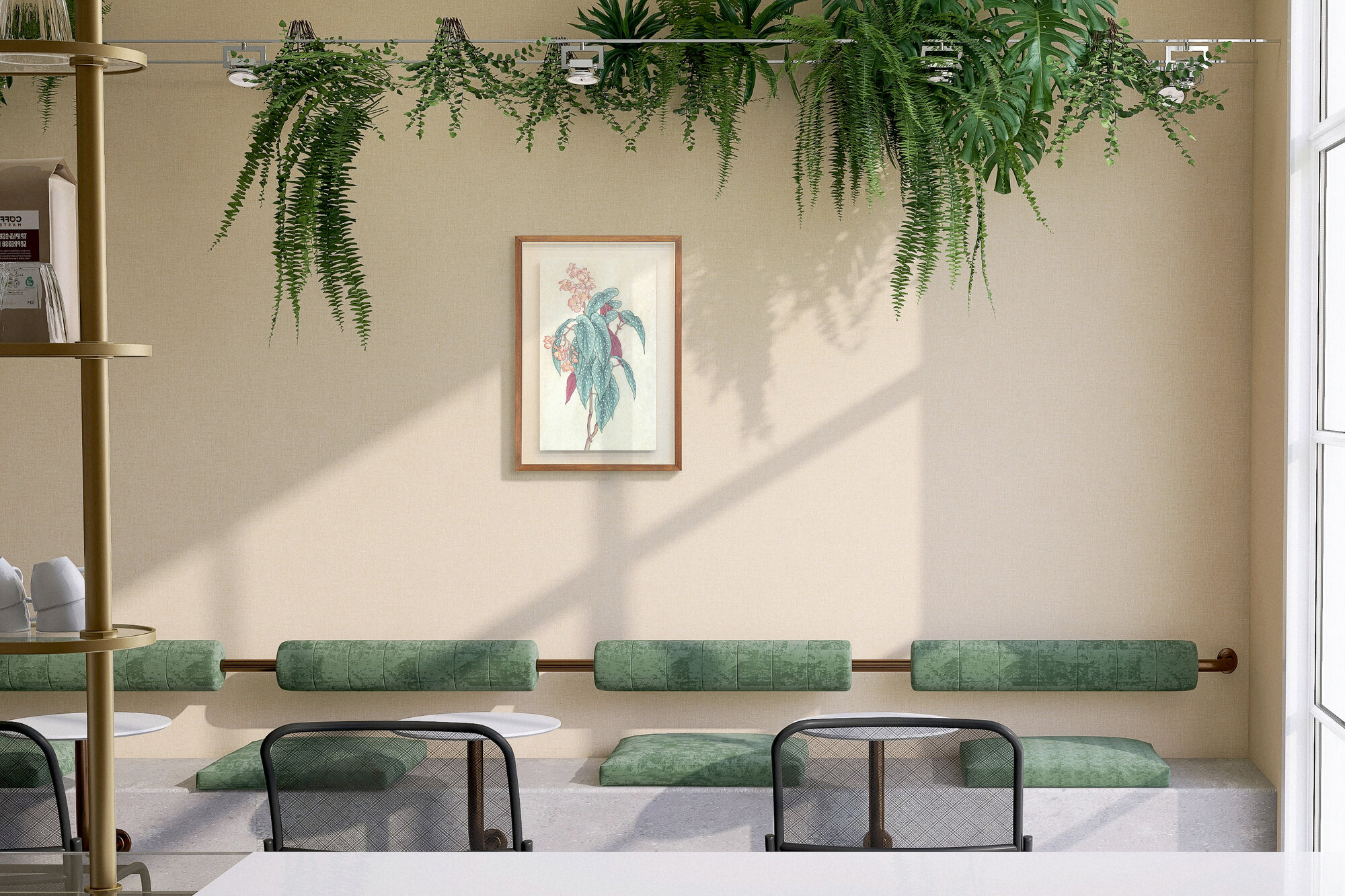
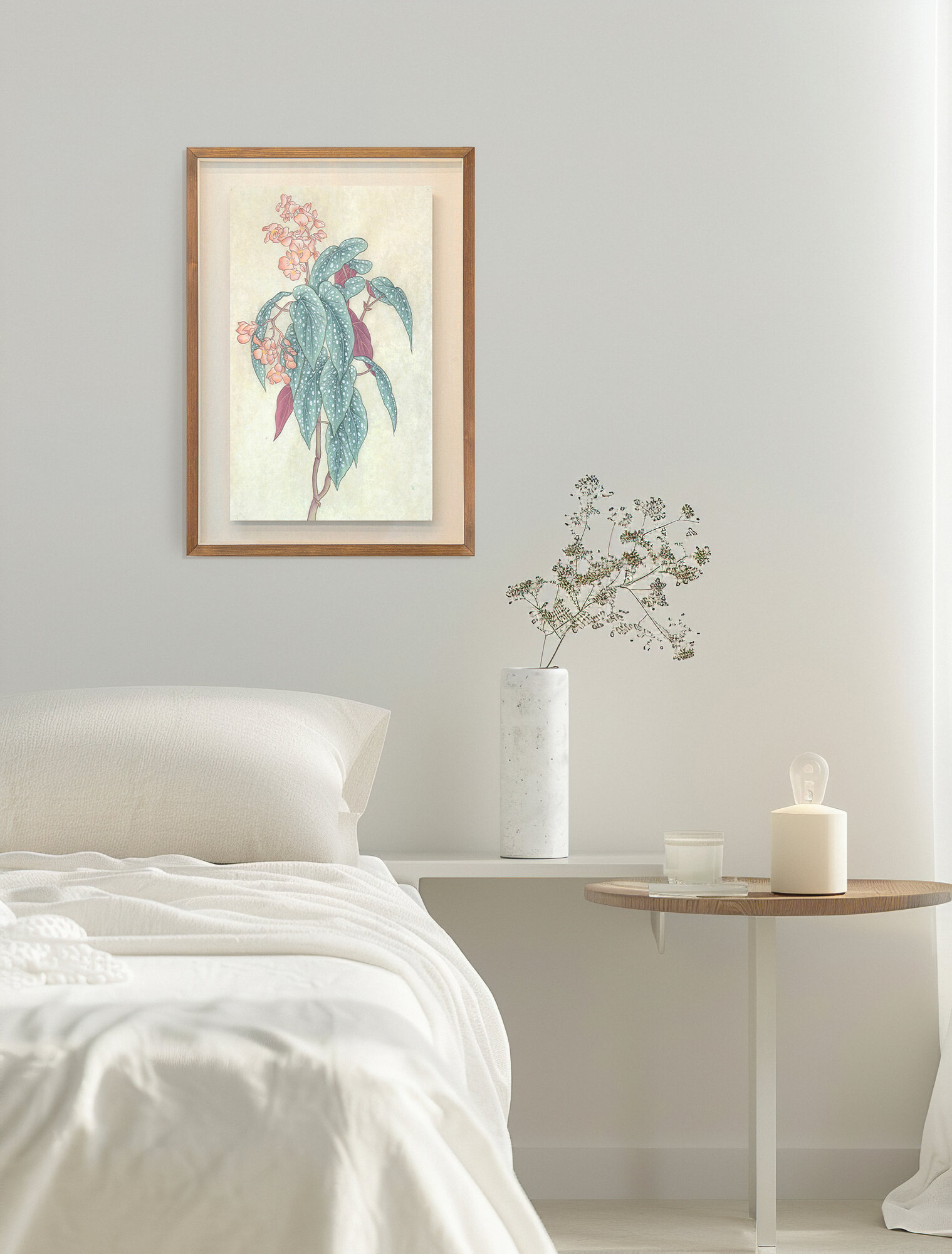
This artwork adapts beautifully to various spaces—from modern offices to traditional homes,
bringing sophistication and Korean cultural heritage to any environment.
INQUIRY BOARD
Leave a private inquiry about this artwork or any other piece. Recent inquiries from collectors are listed below.