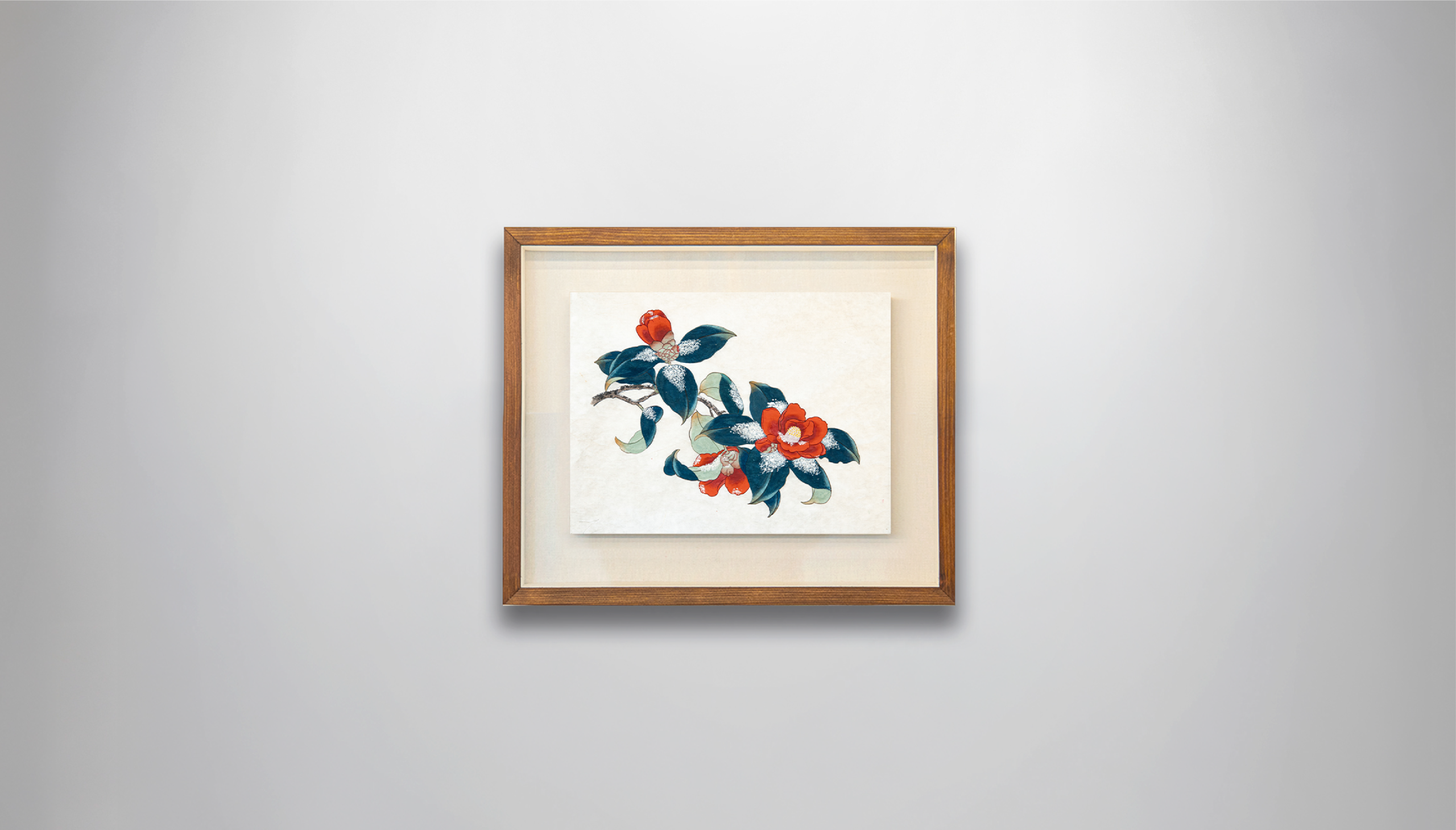
SEOL DONGBAEK
Camellia in Snow
설동백
Artwork dimensions exclude the frame. Items are shipped with the frame included.
Please note that dimensions may vary slightly due to the framing process.
Please allow approximately 2 to 3 weeks for delivery. Each piece is carefully packaged to ensure it arrives in perfect condition.
Camellia in Snow — Korean Heritage Painting
A talisman of the unbreakable spirit — red for warding off, white for clearing, woven into a single flower. Five centuries of classical Korean painting return to this single flower.
Camellia in Snow is exactly the confrontation it sounds like: white snow piled heavy on every branch, and pushing straight through it, a camellia in full, unapologetic red. Cold and quiet white. Hot and insistent crimson. Two forces that have no business coexisting — and yet here they are, not canceling each other out but making each other impossible to look away from. The whole world has gone still and colorless, and the camellia has not received the memo. That single image is already a complete story.
The camellia has carried serious symbolic weight across Korean and East Asian culture for a very long time. Blooming when all other flowers have long since given up — blooming, directly out of snow — it became the emblem of integrity, loyalty, and unshakeable will. old Korean scholars called it the flower of the noble person: the one who does not lose dignity under pressure, who holds their character steady regardless of circumstance. To keep a camellia painting in the home was to make a quiet statement about what kind of person lived there and what kind of values they intended to keep.
The luck and energy dimensions of this talisman run deep and specific. Red, throughout Eastern tradition, is the color that wards off misfortune and calls in auspicious energy — the red of a camellia pushing through snow is not the easy, ordinary kind of luck. It is the fortune that comes after endurance. The auspicious spirit that finds the person who stayed. Tradition held that a camellia-in-snow talisman brought the household a particular kind of protection: not a shield against difficulty, but an unbreakable core that difficulty cannot reach. The people inside would bend but not break, and good outcomes would follow — because they always follow the ones who hold on. In feng shui terms, the camellia's red carries strong yang energy and the warding aura of vermillion, lifting the spirit of spaces that have grown cold, heavy, or stagnant. The snow in the painting amplifies rather than diminishes this — the purifying spirit of white working alongside the life-force of red, clearing and energizing in the same breath.
What makes this work feel urgently relevant today is that the message it carries has no expiration date. For anyone moving through a difficult stretch, enduring a season that has gone on longer than expected, or simply trying to hold their direction when everything around them has gone quiet and cold — this talisman is a silent companion that does not offer empty comfort. It offers something better: proof, rendered in pigment, that blooming in hard conditions is not only possible but is the most remarkable thing there is. White snow and red camellia meet in a single frame, and the spirit that does not break is right there in the painting. As classical Korean traditional aesthetics continue to earn their place in the global conversation through the reach of K-culture, the raw visual tension of Camellia in Snow has begun to attract serious attention from contemporary art collectors and interior designers who recognize that this is not decorative art. It is auspicious art that happens to be beautiful.
Camellia in Snow is, for this reason, a painting that reflects something about the person who chooses to live with it. In a CEO's office or executive suite, it speaks quietly but unmistakably about the kind of resolve that built the room. In a study or workspace, it becomes the thing you look at in the moments when stopping seems reasonable and continuing does not. In a living room or entryway, it changes the air of the space before anyone has had the chance to analyze why — visitors feel something different the moment they walk through the door, and they will not immediately be able to name it. Strong but elegant. Cold in palette, warm in effect. Quiet and yet absolutely impossible to dismiss.
Striking but never superficial — Resilient but deeply beautiful. The kind of painting that rewards longer looking with deeper feeling. Camellia in Snow holds the most dramatic contrast nature offers and fills it with the most enduring human wish — to remain unbroken, and to bloom anyway, and to know that the blooming always comes. To own this painting is to bring the energy of a red flower opening in white snow into your space, and to keep on your wall, permanently, the conviction of an artist who looked at the hardest season and saw, without hesitation, the most beautiful thing.
DISPLAY EXAMPLES
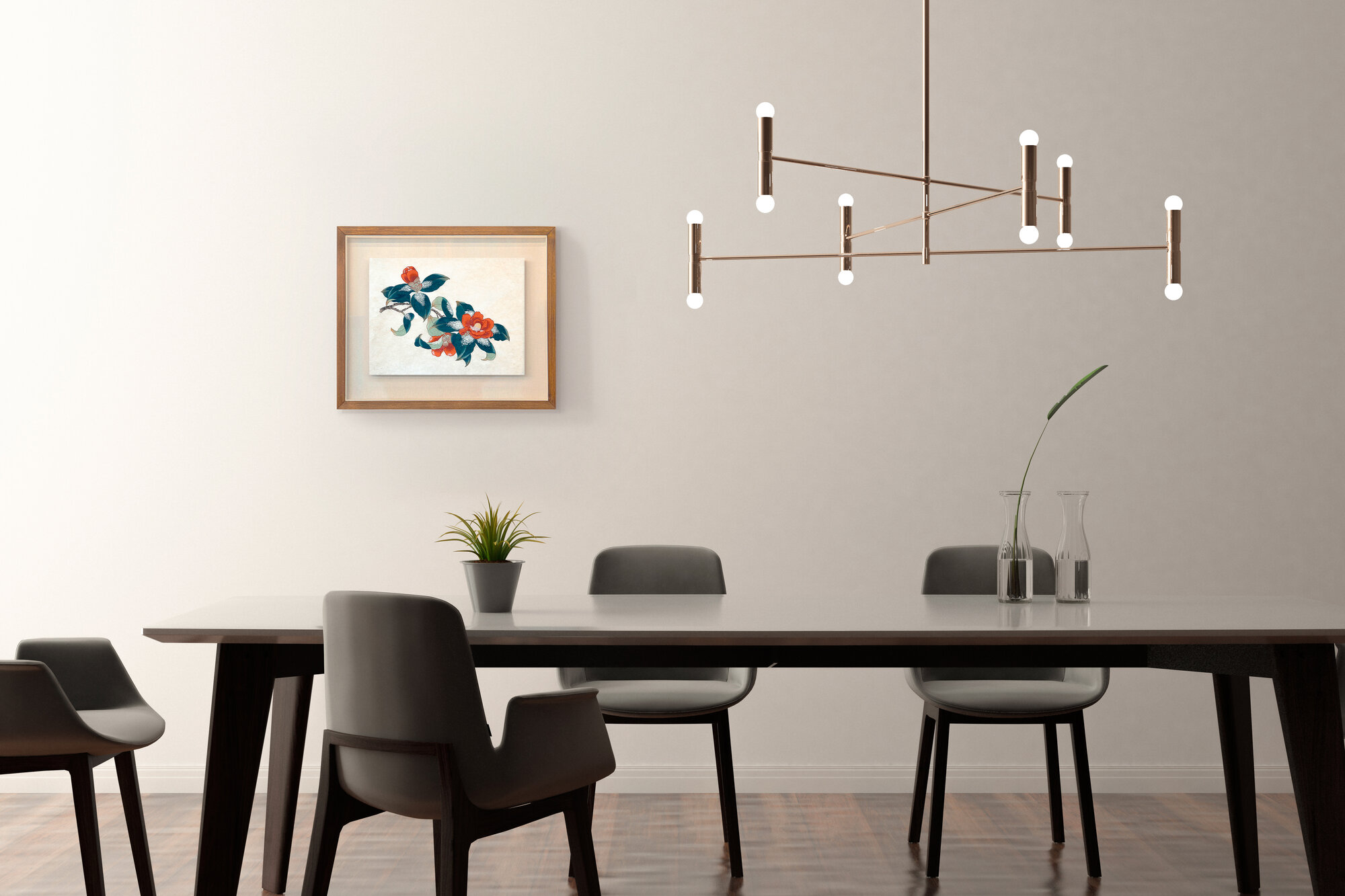

This artwork adapts beautifully to various spaces—from modern offices to traditional homes,
bringing sophistication and Korean cultural heritage to any environment.
INQUIRY BOARD
Leave a private inquiry about this artwork or any other piece. Recent inquiries from collectors are listed below.