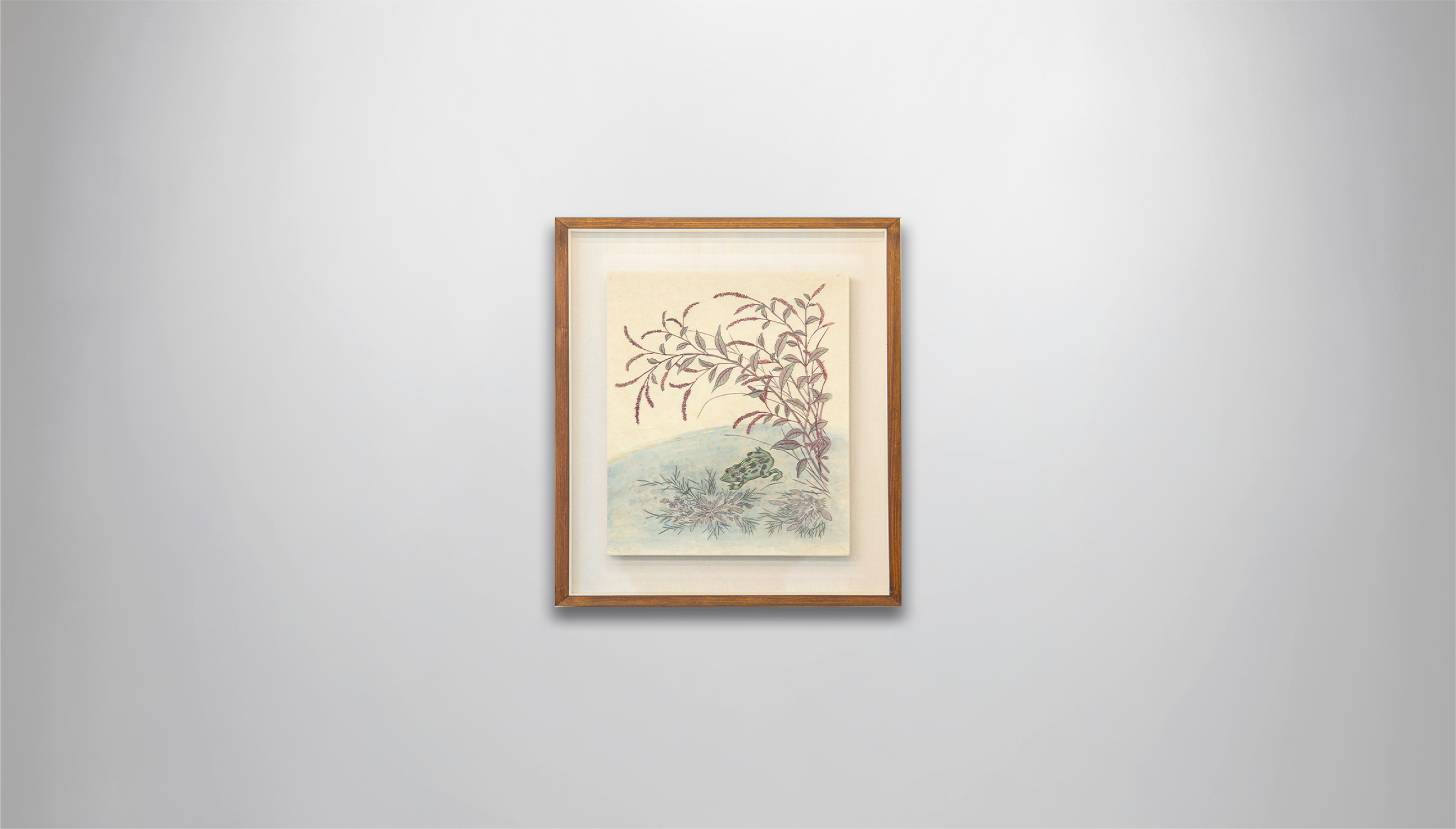
YEOKKWIWA GAEGURI
Persicaria and Frog
여뀌와 개구리
There are currently 3 orders ahead of you, and your order is expected to arrive in approximately 1.5 weeks.
Artwork dimensions exclude the frame. Items are shipped with the frame included.
Please note that dimensions may vary slightly due to the framing process.
Please allow approximately 2 to 3 weeks for delivery. Each piece is carefully packaged to ensure it arrives in perfect condition.
Persicaria and Frog
A quiet talisman for wealth — the frog's gaze turned inward, holding fortune in place. One of classical Korean painting's most quietly intelligent wealth talismans.
The persicaria rises vertically with soft pink and violet flower spikes, rooted right at the edge where water meets land. Below it, a frog sits in perfect stillness, looking like it owns the place. Two subjects. One moment. And yet what this painting holds runs far deeper than its modest appearance suggests.
This is not the work of a royal court painter. It is a minhwa — an old Korean traditional painting that caught a single breath of nature before it slipped away. No obsessive detail, no elaborate composition. Just energy, instinct, and the audacity to leave most of the canvas empty. In Eastern Zen philosophy, emptiness is not absence — it is fullness of a different kind. With one frog and one stem holding the entire frame and the rest left open, the auspicious spirit fills even the spaces left untouched. That quiet decision is exactly why this talisman still stops people in their tracks, centuries later.
What makes this work feel surprisingly current is that Korean nature aesthetics have never really left the building. The bold linework and breathing negative space of minhwa are woven into K-pop art direction, editorial fashion, and the visual identity of global collaborations — Nike, Gucci, and others have already looked to Korean folk painting for inspiration. The directness, the instinctive brushstroke, the way meaning hides behind simplicity rather than announcing itself. That is the sensibility the world keeps reaching for when it talks about Korean cool.
Then there is the symbolism, which has been doing quiet but serious work as a talisman for centuries. The frog has long been regarded as a spirit that calls wealth and prosperity. In traditional feng shui, frogs represent the flow of water — and water means the flow of fortune. The classic placement: hang it so the frog's gaze points inward, toward the heart of the home — keeping wealth from flowing back out. The violet flower spikes of the persicaria, meanwhile, have historically carried the warding color of protection against negative energy. Auspicious prosperity coming in. Bad luck shown the door. Two intentions living together in a single talisman, without making a fuss about it.
This is, in short, a painting for people with taste and a little intention. In a home office, a study, an entryway, or a living room — wherever it lands, it quietly organizes the energy of the space around it. It is small, but not easy to ignore. Understated, but impossible to forget. If you run a business, keep it near your desk. If you are standing at the edge of something new, put it where you will see it first thing. Either way, it will do its job without asking for credit.
Traditional but never stuffy — Striking but never loud. The kind of painting you can look at for years and still find something new. Persicaria and Frog is not simply a nature scene — it is a single exhale from an unknown Joseon artist who looked at the world and decided this moment was worth keeping. To own this painting is to bring that wonder, and that centuries-old wish for a better life, into your own space.
DISPLAY EXAMPLES

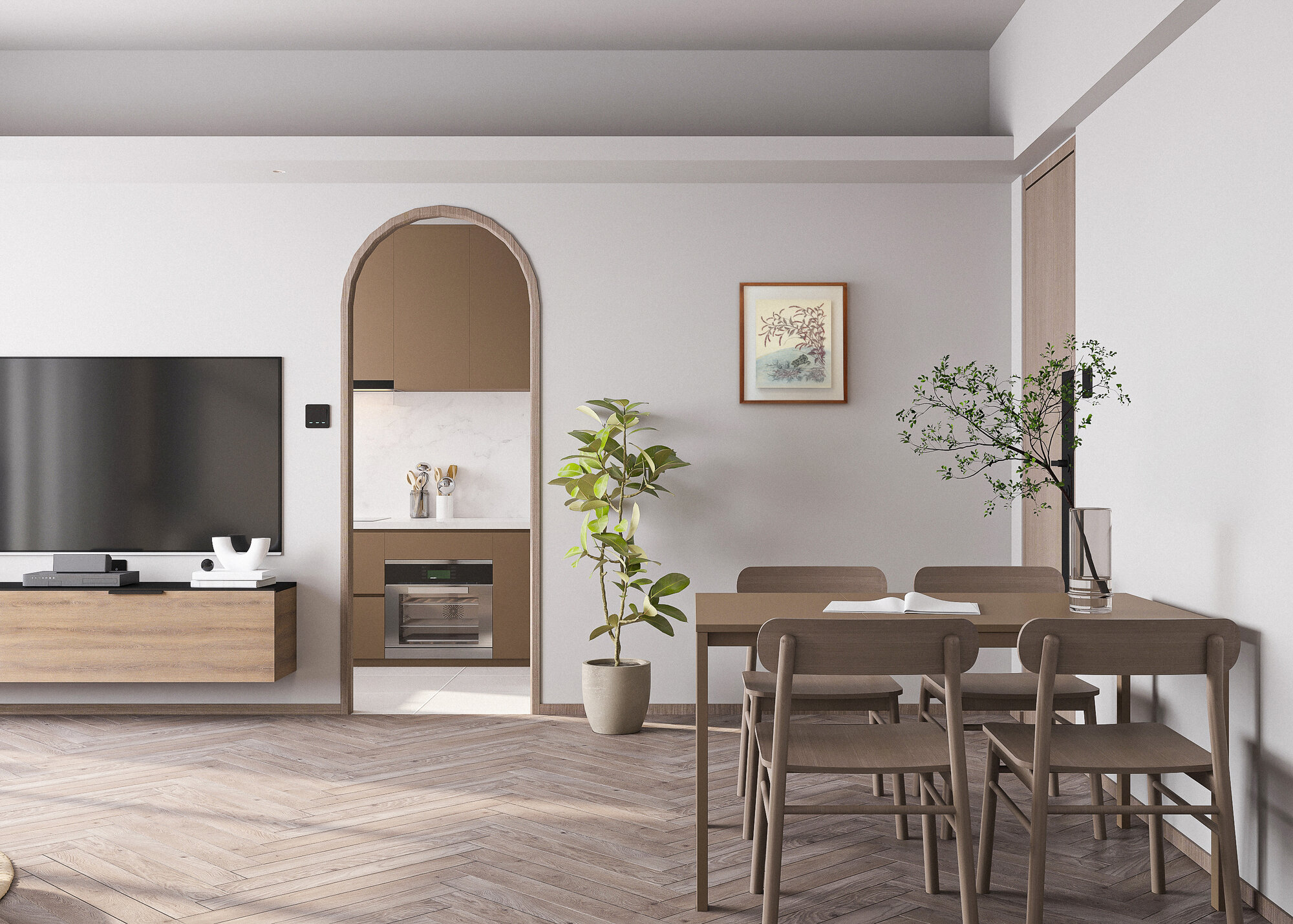
This artwork adapts beautifully to various spaces—from modern offices to traditional homes,
bringing sophistication and Korean cultural heritage to any environment.
INQUIRY BOARD
Leave a private inquiry about this artwork or any other piece. Recent inquiries from collectors are listed below.